It's a Saturday afternoon in a quick-service restaurant. A line out the door. A driver asking where an order is. Two team members didn't show up, so everyone else on the floor is already working harder. The mood is good for now, but everyone knows it's only a matter of time. A guest called in with a complaint, and nobody is free to call them back. And somewhere in the middle of it, the leader on shift is supposed to lead.
Restaurant managers rarely lack information or care. What they lack is room. In quick-service and hospitality, the shift is always louder than the follow-up, so the same complaint can come back week after week while the manager knows exactly what needs saying. Restaurant AI helps when it does the reading and the sorting and leaves the conversation to the person.
I supported 69 openings across the US and Canada, and I was inside every kind of operation along the way. Good ideas were never scarce. Operators, other concepts and headquarters were full of them: ways to track things, ways to manage, ways to lead. What it always came down to was executing the operational day itself. Anyone who runs retail, hospitality, quick-serve or fast-casual faces the same math. Either someone is on the payroll full time to carry out the methods and the campaigns, which can work when business is good, or you can't staff to that level, and then it simply doesn't get done.
Watching that is how I came to develop Operational Intelligence for this kind of business. Here is how I define it:
Operational Intelligence: understanding how every facet of the operation works together, being aware of it all at once, and making the next most powerful decision.
The point is for a leader to assess what is happening, see the whole operation at once, and choose the most powerful way forward without spending more time or labor than they have.
That is the idea behind Replio, which Chase Kubala co-founded with Chazz Spiers. I got the chance to talk with him after I discovered he had built a tool on the foundations of Coaching Intelligence, a phrase he reached on his own, in his own way. We share a lot, and he believes much of what I believe about leading people.
Most talk about AI and leadership stays abstract. I'm writing about restaurants because that's where I've watched this up close. But leadership is leadership. Chase says "restaurants are just the first market," because every business with shifts and a team runs into the same problem. IKEA, which I come back to below, asked the same question about its customer-service team.
Chase answered a set of my questions in November 2026, and his words below are his own. I have no financial relationship with Replio.
Why does the same complaint keep coming back?
Chase has worked in restaurants since he was 14, grew up in a family of operators, and still runs restaurants in Houston. I asked him what leaders have never had room to do. His answer started with what they have always had.
Restaurant leaders have never been short on information. They've been short on time to act on it.
Chase Kubala, co-founder, Replio
A good leader has always known that the same complaint keeps coming back. What they often don't have is the time or the resources to trace it to a shift, have the right conversation with that person, and then check two weeks later whether anything changed. "In this business the urgency always beats the important," Chase told me, "and the rush is always urgent." He has lived it. "You go home knowing exactly what to fix. By the next morning you're on the floor again covering a call-out or running a lunch rush or dealing with a customer."
It isn't a motivation problem or a talent problem, Chase says. "The job simply doesn't leave room for that follow-through."
I have spent more than 1,200 days on operational floors, and I recognize that description. When follow-through doesn't happen, the useful question is what in the day is crowding it out. The answer is usually a shift that left no room.
What do most feedback tools do with a one-star review?
Most of them point. A star rating and a complaint come in, and the tool's job is to tell the leader what went wrong and, too often, who did it. Chase has a short answer to that.
A one-star review already did that. Restaurants are full of tools that hand a leader a list of problems, and they call it insight.
Chase Kubala, co-founder, Replio
I would call that correction with a dashboard on it, and correction stops working as a business grows. It produces compliance, and compliance is rented: it leaves when the leader does. Chase has stood on both sides of the conversation. "I've been the team leader who got told what I did wrong, and I've been the leader doing the telling. It goes the same way every single time: the person gets defensive, they nod, and nothing changes."
Leaders tell because telling is the only tool most of them were ever handed.
Somewhere along the way many of us also learned a second lesson: that a leader is supposed to know everything and do everything, or else step back and do nothing. We hear about leaders who lead from the front and leaders who lead from the back. Those are labels. Neither one solves the problem of leading well, and neither describes the operationally intelligent leader, who sees the whole operation at once and decides what comes next, so that the operation, and the people who run it, stand a chance of getting better for the long term. That is leadership that lasts.
What is the real power of questions in your operation?
This is where Coaching Intelligence comes in. Chase built Replio around a different move. "Ask them what they saw in that shift, and you get a real story. Most of the time, they name the fix before you do." The person on the floor knows what the guest never saw, and a question respects that. In his words, "a fix someone chose to own will outlast any fix I was handed."
Coaching is not only questions, though. On a shift with a thousand things happening at once, there isn't always time to be asked what you think, and sometimes the right move is to be handed the fix and keep going. Chase says Rex leads a leader to the right answer "either through coaching or telling." The skill is knowing which one the moment calls for.
Coaching Intelligence is one expression of Operational Intelligence, and Chase has built his own version of it into Replio. This is mine:
Coaching Intelligence: understanding the gap between someone's knowledge and their ability to apply it when it counts, knowing when, how, and what to ask or teach to close that gap, and making the next most empowering coaching decision.
When a leader uses Coaching Intelligence, they are building and carrying out Operational Intelligence, one coaching decision at a time. Replio puts that into practice.
I held off writing Chapter 11 of Good Enough, the Coaching Intelligence chapter, until I had spoken with Chase directly. I knew he had built something that would bring that chapter to life, especially against a belief many people resist: that you cannot operationalize belief. At its core, I believe Replio does exactly that. It operationalizes a leader's standards, their conditions and, most of all, their beliefs. That is a way to build better leaders, which many organizations still don't know how to do.
Training installs capability. Coaching draws out commitment.
I learned how much that difference matters on the floor, not from a book. At Crumbl, I built the evaluation form for the field trainers I had been sent to assess. It was a comprehensive rubric, and the first thing a trainer told me was, "We heard you were maybe brought in to get rid of people." So I told every one of them the truth about the numbers: most people land at a two or a three the first time, and that is exactly where you should be. Then I built the whole form on two questions. What do I love, and what would I love to see more of?
When I came to that team, the average field trainer stayed about six months. Once the approach had done its work, they were staying two years and more, across a team of fifty-plus. I can't tell you a form did that on its own. I can tell you what I watched: people who were asked what they saw, not told what they had missed, kept learning and chose to stay.
The rubric was never really about assessing people. It gave them a way to believe in the standards, and in themselves. That was the change. Chapter 11 of Good Enough tells the whole story.
What does a restaurant manager get back when software does the reading?
Replio helps businesses get better by making their leaders the star. That is my assessment, and Chase agrees. Its AI co-worker, Rex, reads every guest review, brings a leader the one thing that matters before the shift, and follows up until it is handled. Chase told me Replio now reaches more than 4,000 locations.
Rex drafts the reply to each review in the operator's voice. Nothing goes out unless the operator approves it; the operator is always in charge of when a reply is sent. Rex is support, not a substitute for the leader. When a review could turn into a health and safety issue or a public-relations problem, a foodborne illness claim or a refund request, say, Rex leaves it alone, flags it, and nudges the leader to respond personally. That is where the leader is absolutely needed, and Rex makes sure the operator doesn't miss it.
One early restaurant group started with almost every review unanswered. They cared. They were also running restaurants. Chase says that today the group responds to about 93% of its reviews.
What the leader gets back is the part of the job they signed up for. The routine replies come off their plate.
Drafting replies is only half of it. Rex also does the reading no leader has time for, and what comes back is a synthesis rather than a pile: the one thing that matters before the shift, drawn from everything guests are saying. That is the kind of insight a leader can act on to make the operation better and make the people in it better, and it keeps the whole operation in view. The hours saved aren't banked. They go back into the team, into the moments that need the leader and into developing their people. Chase builds around one action at a time, then the next, instead of piling everything on at once. Rex also remembers what was tried and what worked, so that knowledge stays with the restaurant when a great shift lead moves on.
That is subtraction, something I learned when I studied audio engineering. A sound engineer doesn't fix a muddy mix by adding another signal. They cut what is in the way so the one that matters comes through. Chase draws the line in one sentence.
Rex does the prep and follow-up. The leader does the leading.
Chase Kubala, co-founder, Replio
He is just as firm about the other side of it: "he is not the boss."
Replio is built for leaders, to help them become better leaders. It does not hand them more insight; it gives them a way to act on what they already know.
What is AI for?
Everyone is asking. IKEA gave one answer, which I wrote about in Good Enough. Its AI assistant, Billie, took over a large share of routine customer-service questions: 47% of queries to its call centers over two years, according to Reuters in 2023, and, according to Fortune, about three-quarters of the customers who come to it now. Instead of cutting the call-center workers whose jobs the bot had partly taken over, IKEA retrained them. Its parent company, Ingka, says it has trained about 8,500 of them as interior design advisers.
Replio gives a second answer. Here the leader stays in the job and gets room to do the part only a person can do. Both answers put the investment in people.
Where is this going?
Chase is early, and he says so. Reviews, he told me, are "our wedge," the one signal every business already has. His one-year bet is that Rex moves from handling guest feedback to coaching every team member before and after the shift, "the way that owners would train them," living in the group chats teams already use and handing owners and managers a weekly report they can act on. The five-year bet is bigger: "I want Replio to be how frontline businesses get better." Every business with shifts and a team has the same loss. "The people closest to the customer learn what works, and the knowledge leaves when they do. We keep it."
He is also working toward phone calls with Rex and a way for guests to find places they trust, starting in Houston. Then he put every bet in its place. "None of them work unless Rex is great at that first job, which is helping one leader run one better shift at a time."
Frequently Asked Questions
How can a restaurant manager become a better leader?
A better restaurant manager is first a leader with room to lead, and most don't have it, because the shift is always louder than the follow-up. In my experience the answer starts with taking work off the manager's plate: the reading, the sorting, the routine replies and the remembering. What is left is the conversation only a person can have. From there, the habit that matters is asking the team what they saw before telling them what they missed, and building the conditions in which standards are held and beliefs are nurtured. Chase Kubala, who co-founded Replio, built Rex to do the preparation so a leader can walk into the shift ready to coach.
Is this only about restaurant leaders?
No. The examples come from restaurants because that is where Davide Di Giorgio has watched it up close, across 69 location openings and more than 1,200 days on operational floors, and where Chase Kubala built Replio. Chase says restaurants are the first market, not the last, because any business with shifts and a team loses room to lead in the same way. IKEA reached the same question in customer service. Leadership is leadership: a leader with no room can't coach, whatever the industry.
Should AI coach a restaurant team?
Not on its own. AI can read feedback, prepare the leader, follow up and sometimes hand over a quick fix, but the coaching belongs to the person. Chase Kubala designed Replio's Rex on that line: Rex does the prep and follow-up, and the leader does the leading. Rex is a co-worker, not the boss.
Isn't pointing out what went wrong the fastest way to improve?
Pointing out what went wrong is the fastest to say and the slowest to stick. A one-star review has already told a leader what went wrong. Correction produces compliance, and compliance leaves when the leader does. A question that draws out what the person saw on the shift produces a fix they own, and ownership stays. Some moments call for handing over the fix instead, such as a shift with a thousand things happening at once. Coaching is knowing which one the moment needs.
What is Coaching Intelligence?
Coaching Intelligence is one expression of Operational Intelligence, from Davide Di Giorgio's book Good Enough. He defines it this way: Coaching Intelligence: understanding the gap between someone's knowledge and their ability to apply it when it counts, knowing when, how, and what to ask or teach to close that gap, and making the next most empowering coaching decision.
What is Replio?
Replio is software for restaurants and other frontline businesses, co-founded by Chase Kubala and Chazz Spiers. Its AI co-worker, Rex, reads guest feedback, brings a leader the one thing worth acting on before a shift, drafts replies that the operator approves, and follows up until it is handled. Chase says it now reaches more than 4,000 locations.
Where to start
Leaders need room, space and time to lead. Replio creates it by subtraction: a leader with no room for one more task isn't handed one. That is what I find so brilliant about it. If you want to see what that could look like in your own restaurants, start with Replio.
Room is the first half. What a leader builds in that room is the second: the conditions in which standards are held and beliefs are nurtured. That is what carries a team when nobody is watching.
My keynote, From Correction to Commitment, and my advisory work focus on exactly that, with organizations that want their teams to reach beyond good enough.
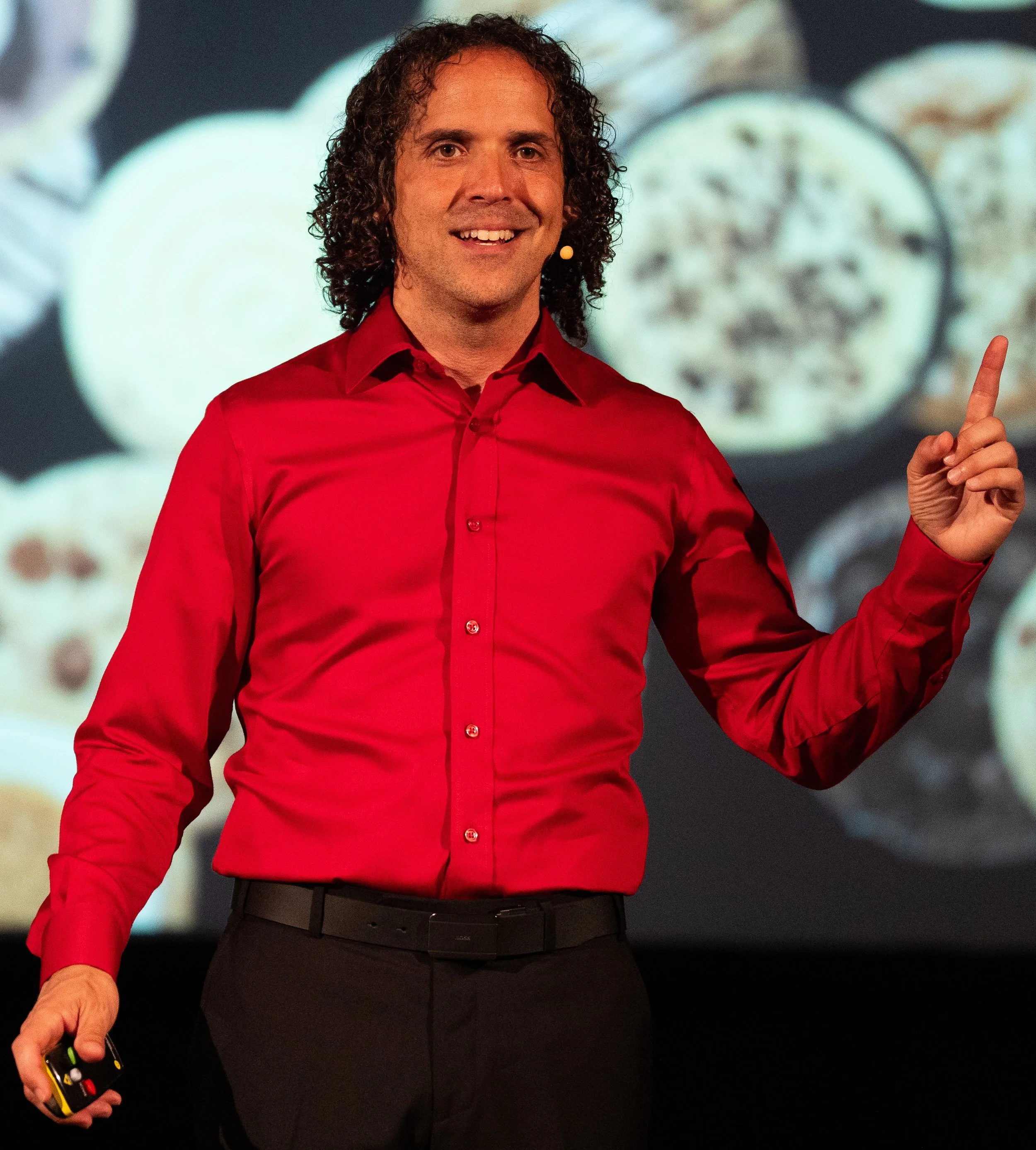
Davide Di Giorgio is a keynote speaker, operations & leadership advisor, and author of the Amazon #1 bestseller Being Unapologetic. He helps COOs, CEOs, and operations leaders get teams to perform when nobody's watching, by subtracting what's in the way, not adding more. It's a lens he built over 30 years on the front line, across hospitality, education, and multi-unit operations, and proved leading Crumbl's first international expansion. The operating systems he has built over that career underpin more than $100M in net sales. His keynote is From Correction to Commitment; his book Good Enough is out now: goodenough.davidedigiorgio.com.