Good enough is the most expensive ceiling in your business.
Not because your team is failing. Because they're succeeding, right up to a line no one drew on purpose, and calling it a good day. The numbers land in range. The targets get hit. The project ships on time and on budget. By every fair measure, the operation is performing. That is exactly what makes this ceiling so hard to see and so costly to leave in place: good enough feels like success all day long. No line item ever names it, so no one ever moves to fix it.
If your operation has started to feel like it plateaued at "fine," this is usually why. Not a motivation problem in your people. A ceiling built into the tools you manage them with. Here is what that means, what it costs across a multi-unit or franchise system, and how the best operators raise it.
What is the "good enough ceiling"?
The good enough ceiling is the height at which a competent team meets the standard and stops. Most of the tools you run performance with are built to enforce a floor, and a floor, in its place, is great. A survey sets a baseline. A checklist guarantees the minimum. Manager training brings the weakest performer up to standard. The trouble starts the moment you mistake that floor for the roof. Then the floor becomes the ceiling, and the whole operation delivers to it and no further.
Underneath every number on your dashboard sits a belief layer, and that layer is what decides whether a team runs at good enough or somewhere past it. Hand the same system to a team that believes the ceiling is real and a team that believes the ceiling is a floor, and you get two different operations out of identical parts. The system didn't change. The belief did.
Why do good teams settle for good enough?
Because almost every tool you use to run performance measures the average and manages the average.
An engagement survey goes out on an ordinary week and returns an ordinary number: what your people do when the schedule sticks, the product's in, and nobody's under real pressure. That's worth knowing, and it's the easy half of the picture. A recognition platform rewards the behavior that's already visible. Manager training sharpens the manager who's already in the room. Each of these is, at heart, a technology for enforcing a floor. You can pour budget into them for a decade and they will carry you faithfully to the line and not one inch past it, because they were never built to reach the layer where the number is actually decided.
This is the part the dashboard can't show you. In The Toyota Way, Jeffrey Liker calls it genchi genbutsu: go and see the actual thing in the actual place, because the metric is a snapshot, not the truth. I learned the same lesson the long way, over 1,200 days on the operational floor and 69 openings across the US and Canada. The report told me a location was fine. Standing in it told me whether the team had reached for anything the report would never measure: the walk to the car, the order repeated back, the extra hand called in before the doors opened.
The floor is easy to count. The ceiling only ever shows up in person.
What does a good enough culture actually cost?
The cost is real and it's invisible, which is the worst combination a leader can face.
It's the margin that walks out the door across a hundred small unsupervised moments: the order that never got the upsell, the customer who wasn't quite delighted enough to come back, the problem someone saw coming and decided wasn't theirs to flag. None of it shows up as a loss, because none of it was ever a number. It's the revenue that was sitting right there and was never reached for. And it compounds, accruing in every unsupervised shift across every location and every office, every day the ceiling stays where it is.
In a multi-unit or franchise system, the cost has a signature you can spot. The playbook is identical from one location to the next. The standards are identical. And yet one unit sets records while the identical unit down the road meets the number and stops. Same system, same standards, different ceilings. That gap between your best unit and your average one is the single largest pool of untapped performance you already own, and you're paying for it whether or not you name it.
I watched this land on a single Saturday. Two locations in the same system, same week, same standards. One read the dashboard as a ceiling and delivered to it: competent, correct, a good day by any fair measure. The other read the same dashboard as a floor and started building, and by close it had made and sold more cookies in one day than any location in the company before or since. Nothing about the day itself was different. The difference was a person who refused to accept just what came through the door, and a belief that moved from him into his crew. I tell that whole story in the opening pages of Good Enough, because it's the clearest proof I have that the ceiling was never in the system. It was a choice.
And this isn't only a floor-level story. It's the headquarters team that hits every target and imagines nothing past it. It's the regional group, the department down the hall, the corporate function that runs clean and never asks what clean is leaving on the table. Every franchise has a corporate side, and the ceiling sits in both.
How leaders raise the ceiling
You don't raise the ceiling by pushing harder or adding on another program. You raise it by removing what caps it, and by moving the belief that your best unit already carries into the ones that don't.
That's subtraction, and it's the opposite of how most operations answer a performance gap. The reflex is to add: another dashboard, another approval step, another module. Piling controls on people is a leash, and a leash produces compliance, which is rented and leaves the second you turn your back. It's the same reason holding people accountable stops working at scale. Handing real control to people, with coaching and guardrails, is a launchpad, and it produces ownership, which stays. The leader goes first. You can't ask a team to hold a line you won't stand on yourself.
I saw what that does when I supported a team of 50 field trainers to raise their own standard, not by correcting them harder but by investing in them and then getting out of the way. Over a matter of months, retention on that team went from about six months to over two years, and the owners' ratings of the training rose with it. I didn't add oversight. I removed what was getting in the way and handed the standard to the people who carried it. The ceiling moved because the belief did.
So the question worth considering isn't how to push your average team harder. It's this: what becomes possible when your best unit's, best team's, best department's ceiling becomes the floor for everyone else?
Frequently Asked Questions
What is the good enough ceiling? Good enough is the most expensive ceiling in your business. It's the height at which a competent team meets the standard and stops, mistaking the floor for the roof. It's the most expensive thing in the operation precisely because it looks like success, so no line item ever names it and no one moves to fix it.
Why do two locations running the same system get different results? Because the system isn't what sets the ceiling; the belief layer underneath it is. Hand identical standards and an identical playbook to two teams, and the one that reads the standard as a floor will outperform the one that reads it as a ceiling, every time. The variable isn't the process. It's whether the people believe good enough is where they stop.
Isn't "good enough" just being realistic about time and resources? Realism is choosing, on purpose, where to invest and where to hold. That's a leadership decision, and a good one. The good enough ceiling is different: it's not noticing you stopped. Realism names the trade-off out loud. The ceiling hides it, and calls the result a good day.
Isn't this the same as "good is the enemy of great"? That framing treats settling as a matter of ambition, as though wanting it more would fix it. In my experience it won't. Good enough isn't a motivation problem in your people; it's a ceiling built into the tools you measure and manage them with. You don't clear it by wanting greatness harder. You clear it by subtracting what caps the team and moving the belief your best people already hold.
The one line to carry out
Your best unit, your best team, your best department has already proved the ceiling is a choice. The work isn't finding more push. It's removing what caps everyone else, and carrying the belief your strongest team already holds into the rooms you'll never walk into.
That's the argument at the center of my keynote, From Correction to Commitment, and the whole of Good Enough. If you want an honest read on what the gap between your best and your average is costing you right now, the Good Enough Calculator is an eye-opening first step.
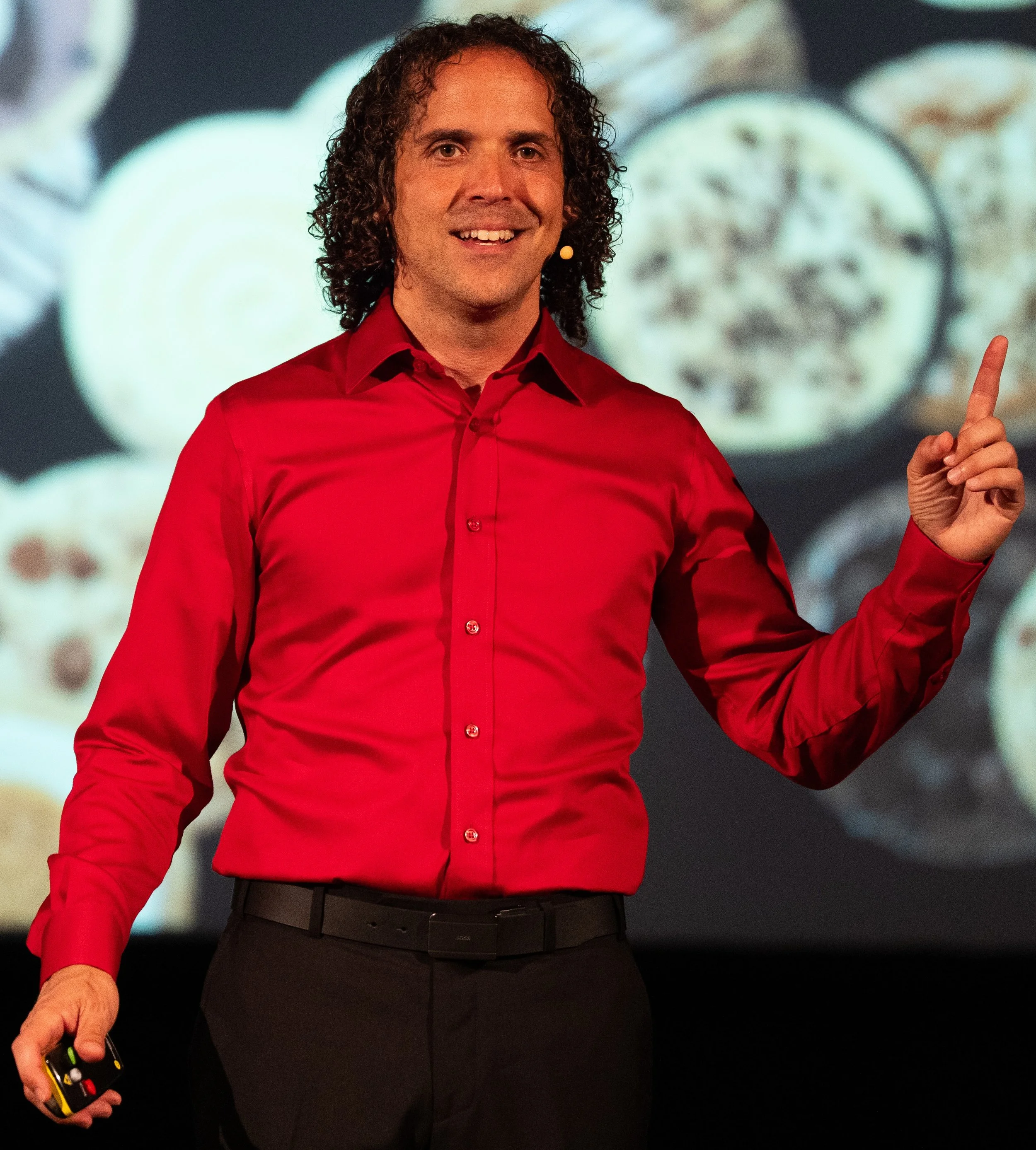
Davide Di Giorgio is a keynote speaker, operations & leadership advisor, and author of the Amazon #1 bestseller Being Unapologetic. He helps COOs, CEOs, and operations leaders get teams to perform when nobody's watching, by subtracting what's in the way, not adding more. It's a lens he built over 30 years on the front line, across hospitality, education, and multi-unit operations, and proved leading Crumbl's first international expansion. The operating systems he has built over that career underpin more than $100M in net sales. His keynote is From Correction to Commitment; his book Good Enough is out on 15 September 2026 at goodenough.davidedigiorgio.com.