Holding people accountable works beautifully. Right up until you leave the room.
The moment you're not watching, it stops. And if you run more than one location, more than one team, more than one time zone, you are almost never in the room. So the results wobble, the standards drift, and the instinct is to lean harder on the thing that seemed to work: catch it, correct it, hold the line. Tighten the controls. Add a check. Have the conversation again.
That instinct is the trap. The version of accountability most leaders were taught is a cost you pay in person, and it cannot be in two places at once. It doesn't scale, because you don't scale.
The sharpest leaders hear that and push back: that's exactly why I built a system. They operationalise accountability so it doesn't depend on them being in the room. And that's closer. But a system doesn't scale either, not really. It just automates whatever you fed into it. Feed it correction and all you've built is a faster, tidier way to catch people. What travels into every room on its own isn't your presence and isn't your system. It's behaviour. (That deserves its own piece, and it'll get one. Hold the thought.)
Here's the part nobody says out loud: the problem was never accountability. It was the direction you were pointing it.
What "holding people accountable" usually means
Say the phrase to most managers and watch what they picture. Someone falls short. You notice. You correct. Maybe kindly, maybe not, but the shape is always the same: the leader is the sensor and the enforcer, and accountability is something you do to people when they miss.
Gallup put a number on how well that's going. Across the leadership competencies they measure, creating accountability is the lowest-rated one, and the one leaders most overestimate in themselves. Their own summary is blunt: leaders mistake accountability for annual reviews and corrective conversations, when what actually moves performance is clear expectations and steady coaching, not episodic correction.
Correction is episodic.
It happens after the miss, in the moment you happen to be present, or the moment you decide to become the leader: later, in the feedback conversation, at the quarterly review, during the assessment. Scale is the opposite of episodic. It's what happens in all the rooms, and all the moments, you will never be in.
Why it works with one team and breaks across ten
At a single site, correction looks like leadership. You're there. You see the shortcut before it becomes a habit. You have the conversation, the behaviour changes, and you conclude that holding the line works.
It didn't work because it was correction. It worked because you were present. Those are different things, and scale is what pulls them apart.
And "location" is just my word for it. Swap in yours: regions, stores, shifts, departments, or a dozen remote teams reporting to a dozen managers you'll never sit beside. A corporate leader four layers up from the work faces the identical maths as a multi-unit operator across several regions. Add a second team and you've halved your presence. Add ten, or a border, or a time difference, and your presence rounds to zero exactly where you need it most: at 7pm on a Saturday in the store you've never visited, or in the client email a manager fires off at midnight four time zones away, or in the decision no one is going to phone you about. Correction-based accountability doesn't fail at scale because your people got worse. It fails because it was always powered by you being there, and now you can't be.
Compliance evaporates the second the manager turns their back. Only ambassadors deliver when no one is watching.
If your operation runs on compliance, you don't have a performance system. You have a surveillance system, and it's only ever as good as your line of sight.
What I saw across sixty-nine openings
Before I was a director, I was a field trainer at Crumbl, and then I supported a team of fifty field trainers whose whole job was to carry the standard into rooms I couldn't be in. We didn't do it by correcting harder. We did it by raising what the standard meant and supporting the people who lived it. Over the seven months I spent pouring into that team and installing this approach, we changed the trajectory: retention that had been running around six months stretched past two years, and the ratings owners gave the training they received climbed right alongside it. That's not a nice bump. It's a different operating model.
I'll be straight about the numbers that usually get quoted next, because they prove something different. After that, I became Crumbl's first director for Canada, the brand's first-ever international market. By the time I left in June 2025, the 24 locations I opened there had generated over $100 million in net sales, and across a wider stretch of the business I'd stood in 69 different openings in two countries and watched 69 different teams find their feet. The $100 million doesn't prove my approach works. A number that size has a hundred parents: the brand, the product, the market. What it proves is that the stakes were real and the sample was big. The 69 openings are what earned me the right to generalise, because I watched the same pattern hold in 69 different rooms.
And it was the same pattern every time.
The teams that held their standards after I left weren't the ones I'd corrected the hardest. They were the ones who understood why the standard existed and had decided, for themselves, that it was theirs to protect. I couldn't manufacture that with a checklist or a spot-check. Every time I tried to enforce my way to it, I got behaviour that lasted exactly as long as I was standing there.
The uncomfortable lesson: the more I reached for control, the less ownership I got back. Control and ownership sit on a see-saw. Push one down and the other comes up.
The flip: the leader goes first
So here's the trick hiding in the title. Accountability isn't the thing that stops working. Holding people accountable is, because it points the wrong way. The kind that scales points back at you first.
Before your team can be accountable to a standard, you have to be accountable to something more human: trust. You have to be accountable to taking the controls away: the extra approval, the hovering check-in, the report that exists so you feel informed rather than because anyone uses it. You have to be accountable to respecting people enough to let them own the outcome, and to living with the fact that owning it means they'll sometimes do it differently than you would.
A distinction worth being precise about, because it's where most leaders trip: the more controls you put on people, the less they own. But control you hand to people, real authority, with support, coaching, and clear guardrails underneath it, does the opposite. One is a leash. The other is a launchpad. They sound similar and they produce opposite teams.
The Ritz-Carlton has run on this for decades. Joseph Michelli documented it in The New Gold Standard: every employee, right down to the front desk and housekeeping, is trusted to spend up to $2,000 a day per guest to solve a problem, with no manager's approval. That isn't the absence of a standard. It's an unusually high one, backed by real authority and a clear guardrail. Control handed down, not controls piled on. It's exactly why their people behave like owners in the moments no supervisor will ever witness.
Push the idea to its limit and you arrive at Morning Star, the world's largest tomato processor: 3,000-plus people, no managers, no titles, no org chart. Accountability there runs entirely peer-to-peer, through what they call Colleague Letters of Understanding, commitments each person negotiates directly with the colleagues who depend on them. Gary Hamel, writing about the company in Harvard , put it plainly: they have "control, and discipline, and focus, and accountability," but they run it "on a peer-to-peer basis without having this kind of a bureaucratic class of overseers." The accountability didn't vanish when the overseers did. It got sharper, because it finally belonged to the people doing the work.
This is subtraction, not addition. I learned it years before franchising, when I was learning audio engineering: you don't make a muddy mix clearer by turning everything up. You cut. You remove the frequencies fighting each other until the thing that was always there can finally be heard. Leadership at scale is the same move. The performance you want is usually already in the room, buried under the controls you added to feel safe. Your job is to cut what's covering it.
Accountability to trust. Accountability to removing the controls. Accountability to respecting them. That's a leader holding themselves to the standard first. It's the only version that keeps working in the rooms you'll never enter.
What actually scales: ownership
When the leader goes first, something measurable happens on the other side. Gallup found that managers who work under a leader strong in accountability are three times as likely to be engaged: 51% versus 17%. In separate research tracking millions of workers, they put roughly 70% of the variance in a team's engagement down to the manager. Not the policy. Not the system. The person who sets the tone and then gets out of the way.
You can watch it happen when the correction machinery comes out. When Adobe scrapped annual performance reviews in 2012, the most ritualised correction tool most companies own, voluntary attrition fell 30% within a year, and managers reclaimed something like 80,000 hours a year they'd been feeding into review documentation. Involuntary exits actually rose, too: when feedback is clear and continuous, the wrong fit becomes visible faster, to everyone including the person. That isn't the model failing; it's clarity doing its job in both directions. Take the apparatus away, and the people who want to be there stop performing for the audit and start owning the work.
Which brings us back to that clever system of accountability, the one built so performance wouldn't depend on you. Here's why it still failed: your system wasn't systematising their commitment. It was systematising their correction. You automated the catching, not the caring, and a faster way to catch people is still a cost that only pays out while someone's looking at the dashboard.
What scales is behaviour someone owns. Not your attention, which is finite, but their commitment, which travels into every room on its own. A team that owns the outcome doesn't need you present to hold the line, because the line is theirs now. You've gone from being the sensor to building people who are the sensor.
That's the whole distance between compliance and commitment.
How to start the shift on Monday
You don't rebuild this in a quarter. You start by moving one thing.
Pick a single control you're holding purely so you feel informed, and hand it back. Then replace "let me review that first" with a clear expectation up front. And here's the part leaders skip: clarity isn't a one-time announcement. It's before the work and during it. People absorb a standard at different depths, and the ones who nod fastest aren't always the ones who've got it. So put the extra time in early, coaching the standard while it's forming rather than correcting it once it's broken. Do that and it multiplies on its own, faster than you'd believe. Skip it, announce once and walk away, and you'll be back to correcting by Friday, wondering why it didn't take.
When something does miss, resist the reflex to tighten. Ask what you can take away, not what you can add. What got in their way? What did the standard leave unclear? What did the system reward that you never meant it to? A miss is usually information about the conditions you built, not a verdict on the person standing inside them. That's the subtractive move, and it's the one that compounds.
Do this a few times and you'll feel the see-saw move. Less control, more ownership. That's the direction of everything that scales.
Frequently Asked Questions
Isn't accountability just about holding people to standards?
Standards matter. But "holding people to them" puts the leader in the room as the enforcer, and no leader can be in every room. The accountability that scales is the leader's accountability first: setting the standard clearly, trusting people to own it, removing the controls that signal you don't, and demonstrating the standard yourself. You are the ambassador for it. You can't ask people to hold a line you won't stand on. And if it's a standard you won't or can't model, it's the wrong standard. Change it, because it will never hold.
What's the difference between correction, compliance, and commitment?
They're a chain, and most leaders stop one link too early. Correction produces compliance: people adjust because you caught them, and it lasts exactly as long as you're watching, because the behaviour was never theirs. It was yours, enforced. Trust produces commitment: behaviour someone has chosen to own, which holds whether or not you're present. Correction buys compliance, and compliance is rented, so it leaves when you do. Trust builds commitment, and commitment is owned, so it stays. If you only ever learned to correct, you've only ever been able to rent. Organisational psychologists Meyer and Allen mapped this years ago: of the three forms of commitment they identified, only affective commitment, the kind where people stay because they *want* to, reliably produces the behaviour that shows up when no one is supervising. Correction can't manufacture a want-to. It can only enforce a have-to.
Does monitoring employees more actually improve performance?
Tighter monitoring can lift short-term compliance inside your line of sight, but it erodes the ownership that produces performance everywhere else. The more controls you add, the more you signal you don't trust people to deliver without them, and trust is the very thing that makes them deliver when you're gone. Handing people real authority, with support and guardrails, scales far better than watching them more closely.
We already run accountability training. Why isn't it moving the numbers?
Most accountability training teaches better correction: clearer feedback, tighter follow-up, which still centres the leader as enforcer. If the numbers aren't moving, the model is usually still "hold them accountable" rather than "build owners." The shift isn't a sharper correction technique. It's a change in who is accountable first.
The line worth carrying
Holding people accountable stops working at scale because it was never really about them. It was about you being there.
Build teams who care enough to perform when nobody's watching, and you stop needing to watch. That shift, from correction to commitment, is the argument at the centre of my keynote, From Correction to Commitment, and it's the work I do with leadership teams who are done renting compliance and ready to own performance.
What's one control you're holding onto right now that your team could carry better than you?
Further reading:
Operational Intelligence: What Your Dashboards Can't Show You — why the instruments most leaders trust can't see the thing they're trying to fix.
Why the Same System Gets Different Results — why the same playbook lands differently across teams.
The Employee Engagement Ceiling: Why Your Scores Won't Move — why engagement scores stay stuck no matter what you add on top, and what actually lifts them.
Good Enough Is the Most Expensive Ceiling in Your Business — why competent teams settle for "fine," and what it costs across a multi-unit or franchise operation.
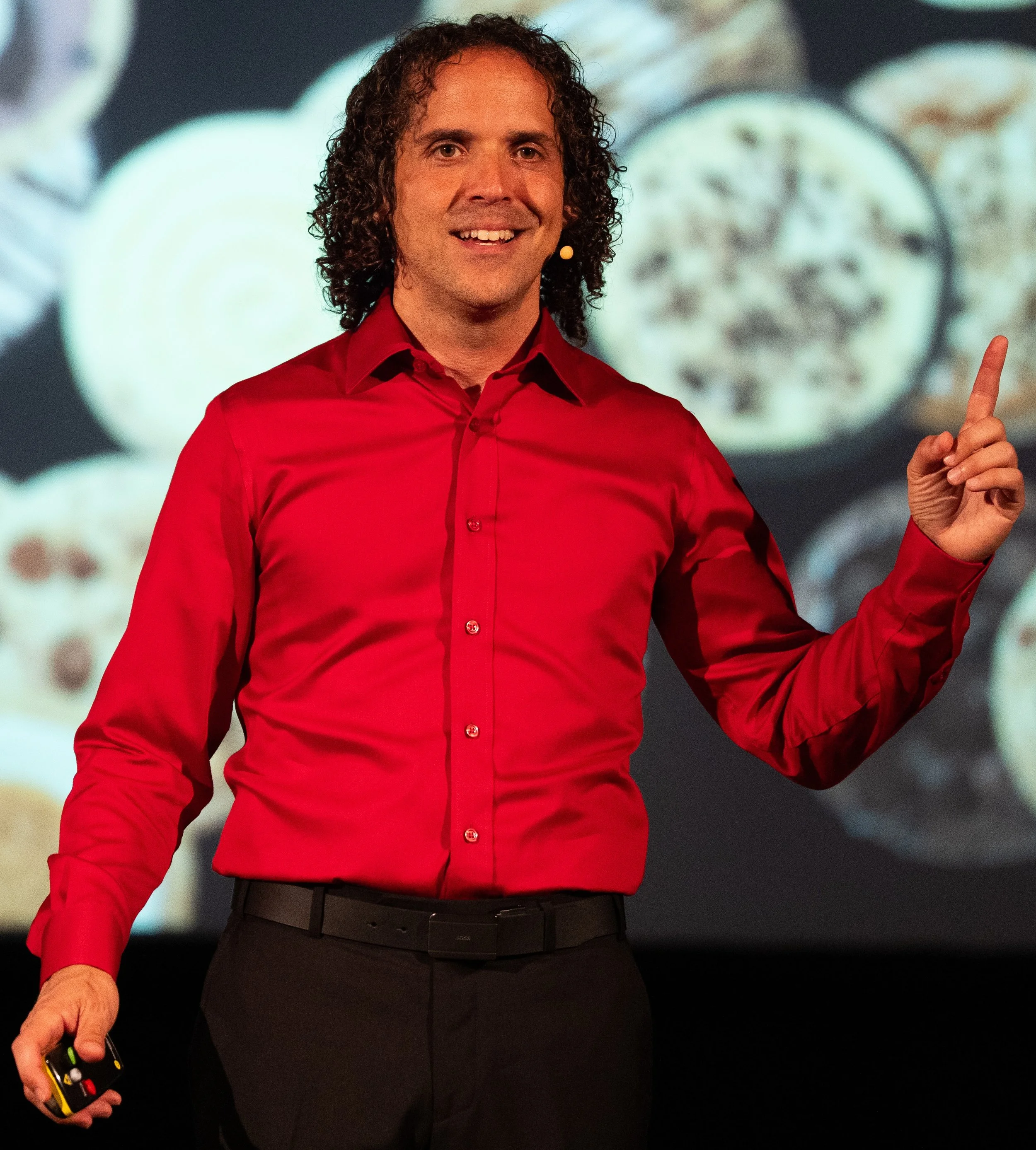
Davide Di Giorgio is a keynote speaker, operations & leadership advisor, and author of the Amazon #1 bestseller Being Unapologetic. He helps COOs, CEOs, and operations leaders get teams to perform when nobody's watching — by subtracting what's in the way, not adding more. It's a lens he built over 30 years on the front line — across hospitality, education, and multi-unit operations, from the floor, not from a textbook — and proved leading Crumbl's first international expansion, where the 24 Canada locations he opened generated over $100M in net sales. His keynote is From Correction to Commitment; his next book, Good Enough, is out on 15 September 2026 at GoodEnough.DavideDiGiorgio.com.