If you have ever read a report that said a team was fine, then walked in on that same team and seen at a glance that it wasn't, this post is about that gap — the distance between what your instruments tell you and what's actually happening on the floor.
Operational Intelligence is the discipline of understanding how every facet of an operation works together, being aware of it all at once, and using that awareness to make the next most powerful decision. It isn't a dashboard, a scorecard, or a reporting layer on top of the ones you already have. It's what you can only get by observing the operation directly, because the instruments most leaders rely on measure two things: what the operation produced, and what people say about it. Neither of those is the operation.
If you search the phrase itself, you'll mostly find enterprise software — real-time analytics platforms, event-processing tools, business-intelligence dashboards. That's a different field with the same name. What I'm describing is a leadership discipline, and I wrote the definition down for my own team years before it was ever a framework — because I needed a way to explain what I was doing, whether I was walking a store floor, a training room, or the back of a theater during a run.
Why more measurement hasn't moved anything
Almost every organization I work with is measuring more than it ever has. Engagement platforms. Pulse surveys. Manager-effectiveness modules. Scorecards refreshed hourly. Dashboards a COO can open on a phone in an airport and see forty locations at once. The investment is real, the intent is genuine, and the tooling is the best it has ever been — AI has only accelerated that.
And the number they actually care about has not moved.
The problem isn't how much they know or how hard they try. Those organizations know more about themselves than any generation of leaders before them. What they're missing isn't data. It's contact — and the context only contact with the real thing can give you. Data can be forwarded. Context has to be witnessed.
What your instruments are actually measuring
Broadly, two categories.
The first is outputs: what the operation produced. Sales, waste, speed of service, ticket times, turnover, mystery-shop scores. All real, all useful, all describing something that has already finished happening. An output is the wake behind the boat.
The second is opinions: what people say when you ask them. Engagement surveys, pulse checks, self-assessments, 360s. Also real, also useful, and also a step removed, because you are measuring what someone was willing to type into a box, at a moment they chose, about a question you wrote in advance.
You might push back that a modern system does more than this — that real-time telemetry, live process data, the dashboard refreshing every few seconds, is a third category. It isn't. It's a faster output: it measures what the operation emitted, at higher resolution and lower latency, which is genuinely useful and still not the operation. Speed doesn't change what's being measured. It just makes the wake behind the boat easier to watch as it forms.
Every instrument you own measures the operation's output or its opinion of itself. Neither one is the operation.
Notice what neither category can do. An output can't tell you why it landed where it did. An opinion can only answer the question you thought to ask. And your dashboard, however good, can only ever return the question somebody already thought to ask, which means the things nobody thought to ask about stay invisible no matter how many screens you build.
That's simply what tools are, and the mistake is treating the readout as the thing itself.
Toyota has a name for the alternative, and it's older than any of our software. Genchi genbutsu: go to the actual place, see the actual thing. Jeffrey Liker documents it as the twelfth of Toyota's fourteen principles in The Toyota Way, and the position is stricter than it sounds. You cannot understand a problem you haven't gone and seen. Reports don't count. Delegating the looking doesn't count. Data is a snapshot; it is not the truth.
It's worth being precise here, because this idea gets softened into "management by walking around" and loses its teeth in the process. Wandering the floor being visible is not the same discipline as going to the specific place where the specific thing is happening, with a specific question, and staying until you understand it.
What direct observation catches that a report can't
When I was supporting a team of field trainers, we had reporting. Every trainer posted a daily report into a channel at the end of their shift. It looked like a functioning system, and it produced almost nothing I could use.
Reading through them was like reading a personal diary. How the day felt. What was hard. Who was lovely. Nothing in there let me evaluate how an opening was actually going, or how any individual trainer was actually developing. We had a river of information and no picture.
So I went and looked instead. Three or four days on site with each trainer, watching them work, coaching in the moment, then a recorded evaluation sent the following Monday. What I saw in those days did not appear anywhere in the reports, because it couldn't. Reports capture what someone decided to write down. Observation catches what nobody thought to mention.
Early in my time in the field, the standard opening ran like this. Owners came in and were taught everything about running a store in a single day. That same evening, a crew of anywhere from forty to a hundred new hires was rotated through every station in the building. On paper, an entire location trained in twenty-four hours. Every box ticked. The system would have reported that team as trained.
The next day, almost nothing had been retained. The people weren't weak and no one was lazy. A day is simply not how long it takes a human being to learn a job, and a rotation through every station in one evening is exposure, not training. The standard was clear. What it left unclear was that being shown something once and being able to do it are different states, and the system had no way to tell them apart.
No report was going to surface that, because the report was measuring completion. Completion was genuinely 100%.
A report tells you what happened. It cannot tell you what is happening.
Two questions before you open your mouth
Most managers open a performance conversation when what they should be opening is a diagnostic one. Before you decide what to say to someone, there are two questions worth answering, and they're questions about the situation, not about the person.
Could they do it, if I were standing right there?
This is the capability test. Not "are they good," not "do they care" — could this person execute the standard, right now, with you present and available. If the answer is no, you don't have a performance issue at all. You have a training conversation, and having the performance conversation instead will make everything worse.
Do they do it, when I'm not?
This is the commitment test, and it's the one that tells you what you've actually built.
Compliance is what you get when someone could do it and you were there. Commitment is what you get when they did it and you weren't.
What you do next depends on which of those comes back "no," and the responses are different enough that guessing is expensive. Working through that branch is most of what I do from a stage, including what each answer obliges the leader to do rather than what it says about the person.
Both questions are about seeing, not about managing — and neither can be answered from a dashboard. Question one requires you to have watched someone work. Question two requires you to know what happens in rooms you're not in. That knowledge only comes from having built something that operates without you, and then finding out whether it did.
Where this leaves your dashboard
Keep it. I want to be clear about that, because the argument here is not that measurement is a waste.
A good instrument can confirm compliance. It tells you that on an ordinary Tuesday — in a location you've never walked, on a team you've never met, in a department three time zones away — the process ran and the numbers came in where they should. That's worth every hour you've spent building it, and I'd build mine again.
What an instrument cannot see is commitment, because commitment lives in the decisions people make in the moments no procedure anticipated, and those decisions come from whether the person believes the work is theirs. Correction can't manufacture that and measurement can't see it — I made the first half of that case in why holding people accountable stops working at scale.
Which is where seeing turns into doing something. Ritz-Carlton is one of the clearest examples I can share to illustrate the point. Every employee is authorized to spend up to $2,000 per guest, per day, to solve a problem, without asking a manager; Joseph Michelli documents it in The New Gold Standard. The figure is the least interesting part. What matters is how they got there, and that is Operational Intelligence in practice. They saw the bigger picture: the whole operation, and how every part works with every other part. They recognized that, to get the outcome they wanted, they would give every employee the trust and respect to act, because the person on the floor already knows what the guest needs. Ritz-Carlton decided that the cost of routing that knowledge upward, waiting, and acting late was higher than the cost of trusting it.
They didn't add a system to tell them what was happening at the guest's table. They took away everything standing between the person who could already see it and the moment it mattered. The information is already in the operation. It's in the people doing the work, in what they do when nobody's checking, in the workaround someone invented in week two that nobody has ever mentioned in a meeting. You don't have an information shortage. You have distance between where the information lives and where the decisions get made.
Operational Intelligence is what closes that distance. Not another layer on top. Less between you and the thing.
What it costs to keep guessing
I spent more than 1,200 days on the operational floor at Crumbl and supported 69 location openings across the US and Canada. That number isn't there to be impressive — it's there because it's the only reason I can say what follows with any confidence. And I didn't first see this pattern there. I've watched it repeat for as long as I've worked with people: in classrooms and rehearsal rooms, with students and educators, with orchestras and casts, with founders and executive teams — and then across sixty-nine store openings that had nothing to do with any of it. Different work every time. The same gap between what a report says and what's actually happening in the room.
Here's what it produced in the one case where I can isolate a result. With that field-trainer team of fifty-plus people, the reporting told me nothing, so I replaced it with observation, and then I coached against what I actually saw rather than against what had been written down. The language was simple: here's what I loved, here's what I'd love to see more of.
I should tell you how that landed at first. One of the trainers said it to my face: we heard that you were maybe brought in to get rid of people. That's what showing up to watch means to most people, because in most organizations that's exactly what it's for. It took months of doing the opposite before that assumption came off.
Over the roughly seven months I spent installing that approach, retention on that team went from about six months to over two years, and the way franchise owners rated the training team went up with it. I can't hand you a control group, and I won't pretend the rest of the business was holding still. But I watched it happen from inside, and the thing I changed first was where the information was coming from.
What becomes possible when you stop asking your systems what's happening and go and find out?
That question sits at the center of my keynote From Correction to Commitment, which I deliver for leadership teams who have measured the problem thoroughly and watched it stay exactly where it was. It comes out of the same practice as everything above. If your instruments are all reporting green and your instinct says otherwise, that's the conversation worth having.
And if you'd rather start with a number than a conversation, the Good Enough Calculator does a smaller version of the same job: it puts a figure on what an operation running at "fine" is actually costing you, which is usually the first thing a dashboard was never built to show.
Frequently Asked Questions
What is Operational Intelligence?
Operational Intelligence is understanding how every facet of an operation works together, being aware of it all at once, and using that awareness to make the next most powerful decision. In practice it's a system of direct observation, assessment and evaluation, reduced to the next most powerful step. It's a leadership discipline rather than a reporting tool: the information comes from watching the operation run, not from what the operation reports about itself.
Where did Operational Intelligence come from?
From the theater, long before it was about business. As a creator, producer, and director I had to watch a cast interpret script, music, and movement while keeping the whole show in view — the orchestration, the blocking, the lighting and sound, the way one actor's choice reshaped the scene around them. Conducting taught the same thing: the score tells each musician what to play, but the piece only comes alive in what you shape on top of it — the phrasing, the dynamics, the details no notation captures. It's the difference between a building that houses people and one that becomes a landmark. The cost of good enough was never in choosing it on purpose, with the whole picture in front of you; it's in arriving at it by default and mistaking it for the ceiling. You can only tell those two apart when you can see the bigger picture — how everything works together, all at once. Years later, walking a store floor was the same act as walking a stage: watch the parts, understand the whole, make the next most powerful decision.
Isn't this just another KPI framework?
No, and it isn't the enterprise-software category of the same name either. A KPI framework decides in advance which outputs to track and then tracks them, which means it can only ever return the questions somebody already thought to ask. Operational Intelligence is the opposite motion: you observe the operation without a predetermined readout, so that the things nobody thought to measure — the workaround, the unspoken bottleneck, the standard people are interpreting differently in different rooms — are able to surface at all. Keep your KPIs. They hold the baseline. They just aren't the source.
Why don't dashboards fix team performance?
Because a dashboard measures outputs and opinions, and performance is generated by neither. An output tells you what already happened without telling you why. An opinion tells you what somebody was willing to write in a box in answer to a question you set. Neither can show you the decision a person makes in a situation your process never anticipated, and that decision is where the difference between your best team and your average one actually lives.
How do you see what's happening on a team you can't physically visit?
It starts with standards — and not only standards that are clear to you. Clear to the people expected to uphold them. Most of what gets called a performance problem is really a standard that was never shared cleanly in the first place. So once you believe a standard is clear, go and watch someone perform it. That one act tells you two things at once: whether the standard is actually clear, and whether anyone cares to uphold it when you're not in the room. From there, distance stops hiding as much — because you've built something you can read from the outcomes instead of something you have to surveil. Monitoring only shows you behavior that happens while you're watching; a clear standard and people who own it show up in results you can see from anywhere.
If you're carrying a stretch your team can't afford to merely tolerate, closing that gap is the work I do with leadership teams directly.
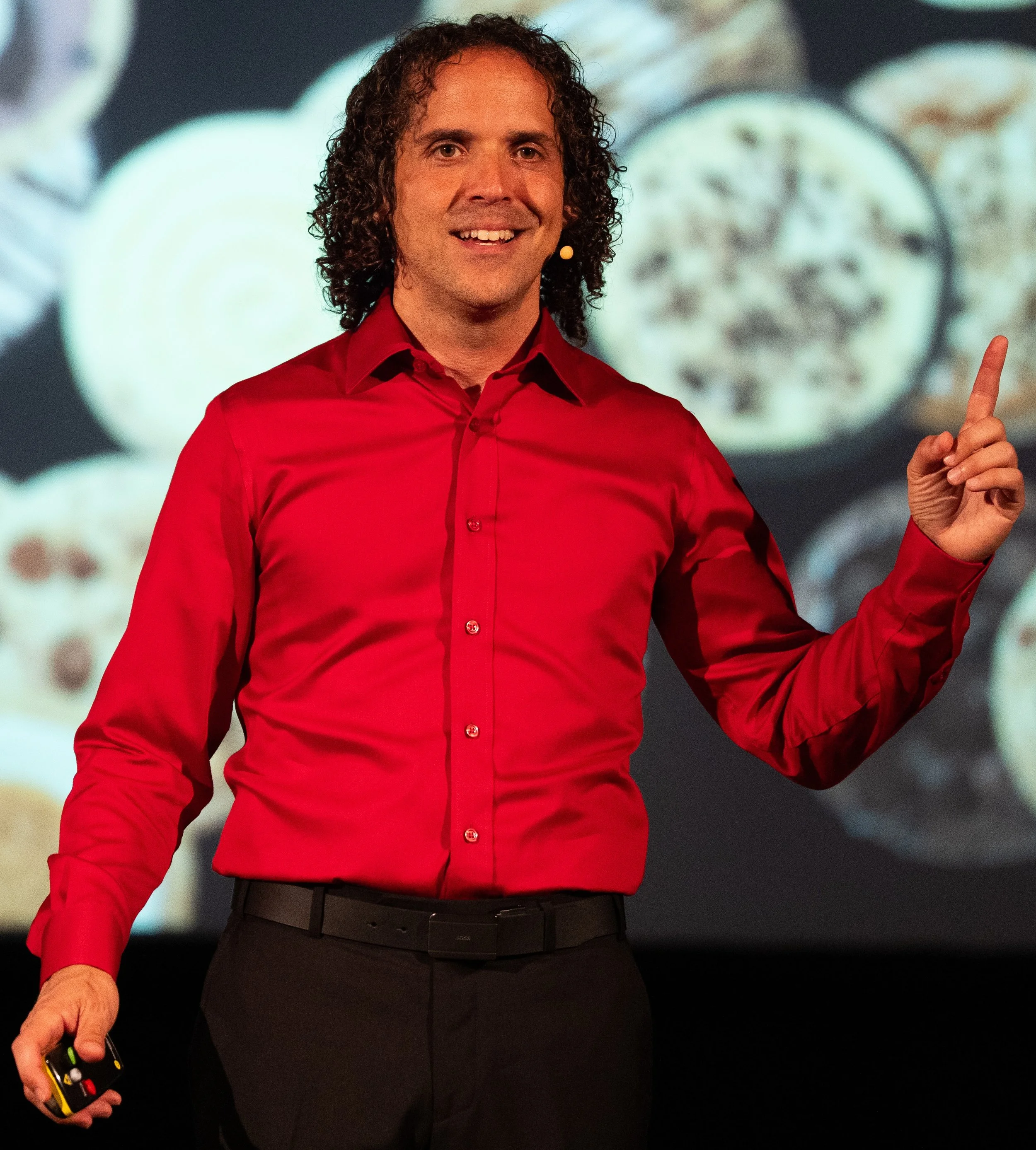
Davide Di Giorgio is a keynote speaker, operations & leadership advisor, and author of the Amazon #1 bestseller Being Unapologetic. He helps COOs, CEOs, and operations leaders get teams to perform when nobody's watching — by subtracting what's in the way, not adding more. It's a lens he built over 30 years on the front line — across hospitality, education, and multi-unit operations, from the floor, not from a textbook — and proved leading Crumbl's first international expansion, where the 24 Canada locations he opened generated over $100M in net sales. His signature keynote is From Correction to Commitment; his book Good Enough is out on 15 September 2026 at goodenough.davidedigiorgio.com.