You already know the team I mean. Same handbook as everyone else, same training, same targets, same product. And somehow they operate in a different league. Nobody in the building can tell you exactly why.
Here's what I've found, after a lot of years in rooms where that question gets asked. Systems don't scale performance. Behaviours do. A system can only ever repeat what you put into it, so if you feed it correction, what you have built is a faster, tidier way to catch people. What travels into the rooms you will never be in is behaviour that somebody owns.
If you run more than one team, more than one site, more than one time zone, you have watched this happen and probably explained it away. You standardised. You wrote the playbook, ran the certification, built the dashboard, and most of it landed. And still, one team does something the others cannot seem to copy, and there is no line in the manual that accounts for it.
"That's exactly why I built a system"
I want to say this before anything else, because I have been on your side of it.
While I was Director for Crumbl's first international expansion into Canada, I worked with a small group of colleagues from other departments to rebuild the way recipes were written and the system underneath them. Not the recipes themselves, and not the food science. The writing of them, and the architecture beneath. The result: bakers in every location got it right more consistently, with less guesswork. Errors went down. So did support requests. Canada ran it first; months later the US adopted it too.
So when a COO tells me the answer is a better system, I don't argue. I built one. It did exactly what it was designed to do.
Your system isn't the problem. It's just not the thing that travels.
A system carries the floor. It makes sure that on an ordinary Tuesday, in a place you have never visited, with people you have never met, the work is right and the process holds. That is worth every hour you have put into it. What a system cannot do is carry the ceiling, because the ceiling is set by what people choose to do in the moments the system never anticipated.
The week everyone got the same everything
Here is the cleanest natural experiment I've watched play out in the field.
Crumbl runs on a weekly rotating menu. It's the thing the brand is built on, and operationally it means every location gets the same everything in the same week: the same lineup, the same promotion, the same conditions, the same instructions. Nobody has a local advantage. Nobody has better product or better marketing than anybody else.
On the Saturday of one of those weeks, a single location sold 10,000 cookies and set a company record that still stands. Saturday is also the day teams prep the following week. This one ran record volume and full next-week prep at the same time, and never ran out of anything for long.
What produced the gap was not in the system, because the system was identical everywhere. It was a series of decisions nobody had been told to make. The owner and his leadership team added an item to the lineup, a flavour they knew their customers loved, and one that would backstop a sellout and use inventory more efficiently. The team set up an additional finishing station in the bakery so orders had somewhere else to go. They ran at their practical ceiling for six consecutive hours, and when they finally dropped off it, they dropped to about two thirds and held there until close.
Now the part that matters most, and the part I nearly missed.
The owner was on the floor for only a few hours of that record day. The crew ran the peak. They managed production, stock and flavour balance, and held the line without him and without anyone at head office watching a screen. When I asked him about it afterwards, he wouldn't take it for himself.
"My leaders were prepared, trained, and experienced. Me micromanaging wouldn't have done anything."
I know what the fair objection is: he's an owner, of course he cared more. It's a real point, and I would make it too. But the owner's care is not what set the record. The record was set in the hours he was absent, by people with no equity, no bonus tied to the day, and nobody standing over them. The belief was built in the ordinary months before that Saturday. That's the only reason it held on the day.
A system only automates what you feed it
I was in the room for 69 openings across the US and Canada. Sixty-nine different teams, watched with my own eyes. I saw the same pattern many more times than that, in reports and on calls and from a distance, but the 69 are the ones I can tell you about first-hand. The pattern doesn't vary much.
A system is a machine for repeating your inputs at volume. That is its virtue and its entire limitation. Feed it clarity, coaching and real authority and it repeats those. Feed it correction, and what you have automated is catching, not caring. You get compliance, which is rented behaviour: it performs while it is observed and stops when it isn't. It's the same problem I wrote about in why holding people accountable stops working at scale. You don't scale, so anything that depends on your presence doesn't either. Building a system to carry your presence for you doesn't solve that; it makes the same input travel faster.
There is no procedure anywhere that reads "drive to the hardware store on a Saturday, buy the largest dehumidifiers you can find, install them yourself, then bring in a specialist and fix the ventilation permanently." Another team did exactly that when they discovered the humidity in their bakery was stopping the product from setting. I wasn't there. Nobody from head office was there, and nobody could have arrived in time. They saved the day, and then they solved the problem underneath it so it couldn't come back.
You cannot write that into a manual, because the manual would have to anticipate a problem nobody has had yet, and a specific team's response to it, before either exists. What you can do is build the conditions in which somebody decides to be that team.
What travels without you
Behaviour travels when people own the work rather than execute it. In my direct observation, three conditions produce that, and none of them costs you anything structurally: no equity, no new incentive scheme, no restructure. They draw on the work of Jon Pierce, Tatiana Kostova and Kurt Dirks, researchers who mapped how psychological ownership forms inside organisations. The operational framing below is my own adaptation of it.
Real influence
People need genuine authority over decisions that affect their work, not consultation theatre. The crew who set that record could reconfigure the floor mid-rush because reconfiguring the floor was theirs to decide. Where every deviation needs approval, you have installed a leash and then wondered why nobody runs.
Visible contribution
People need to draw a line between what they did and what changed because of it. Credit isn't the point, and neither is a recognition programme. What they need is line of sight. When you sever it, capable people disengage from work they were proud of, and they rarely tell you why.
Connection to the whole
People need to understand what depends on their part. A team that knows a stockout at 2pm means a family drove across town for nothing behaves differently from a team that knows only its hourly target.
Correction can produce none of these. It can only ever produce the absence of the thing you didn't want.
Where the system still earns its place
I'm not arguing for fewer systems. I'm arguing that we keep asking them for the one thing they were never built to give.
Toyota is the most copied operating system in industrial history, and thousands of companies have installed the tools without getting the results. Jeffrey Liker and David Meier's Toyota Talent (McGraw-Hill, 2007) is direct about why. Their premise is that Toyota doesn't just produce cars, it produces talented people, and that the advantage comes from a teaching culture in which managers develop trainers, rather than from the tools themselves. The system is downstream of the behaviour. Companies who lift the system and leave the teaching behind get the manual without the method.
Which is the same thing I watched happen in a bakery, at a much smaller scale and with far more sugar involved.
Build the system to carry the floor: safety, quality, consistency, every part of the operation where variation is pure cost. Then stop asking it to do the other job. The ceiling is a behaviour question, and it is answered by what people do when the process runs out.
What to subtract before you add another process
The instinct when performance varies is to add. Another check, another module, another dashboard column. The more useful move is subtraction: removing what is in the way rather than layering more on top. Three places to look this quarter.
Find your approval bottlenecks
List every decision your best manager cannot make alone, whether they run a site, a region, or a team you rarely see. For each one, ask what would actually go wrong if they could, and whether that risk is bigger than the cost of the delay and the message the delay sends. Most of those approvals were installed after a single incident years ago and have been taxing everyone since.
Audit what your system rewards
Look at what your reporting actually surfaces. If it is overwhelmingly exceptions, misses and variances, you have built an instrument that only detects failure. Your managers and leaders know that, and they manage to it.
Check whether the standard is teachable
If a standard exists only as a number, it's a target, not a standard. If it exists only in an SOP, or in a document someone read (maybe), signed off on, or nodded along to in a meeting, it isn't a standard either. People can meet a standard they can picture. Clarity is not a launch announcement; it's something you invest in early and keep investing in while the work is forming, which is what stops you having to correct it later.
None of this is a rollout. It's a set of things you take away.
The system was never the mistake. Building it is one of the more responsible things a leader can do, and I would build mine again. The mistake is expecting it to produce commitment, when all it can do is repeat what you already put in.
What becomes possible when you stop trying to make your process travel, and start building the behaviour that already does?
That question sits at the centre of my keynote What Works Doesn't Scale, which I deliver for multi-unit and international operators who have standardised everything and still have a performance gap they can't close. It runs alongside From Correction to Commitment, which takes on the input problem directly. If your organisation is running the same playbook everywhere and getting results that don't match, that's the conversation worth having.
Frequently Asked Questions
Why do the same systems produce different results across teams and locations?
Because a system standardises inputs, not behaviour. It can guarantee the process is followed; it cannot generate the decisions people make in situations the process never anticipated. Two teams running identical standards will diverge at exactly the point where the manual stops, and that gap is set by how much ownership the people in each team actually have.
Isn't accountability just about holding people to standards?
That is the version most of us were taught, and it's the reason accountability keeps disappointing leaders. Correction-based accountability does two things, and both of them cap you. It's what you do after a miss, which means it only works while you are present. And it's what you do to prevent a miss — the checks, the approvals, the sign-offs — which builds a container people learn to operate inside. Nobody reaches past the edge of a container, so the correction becomes the ceiling. The more useful definition is ownership: people delivering because they care about the outcome, not because someone is checking. The first is rented and leaves when you do. The second stays, and it has no ceiling built into it.
Does this mean I should stop investing in systems and SOPs?
No. A good system holds the floor — safety, quality, consistency, everywhere you have never been. Keep building it. Just stop asking it to produce commitment, because it can only repeat what you feed it. Feed it correction and you have automated catching people rather than developing them.
How do you get a team to perform when nobody is watching?
By building ownership before the moment that tests it. In my experience three conditions do most of the work: real influence over decisions that affect their work, a visible line between what they did and what changed because of it, and a clear understanding of what depends on their part. Where those exist, people make good decisions unsupervised. Where they don't, no amount of oversight substitutes.
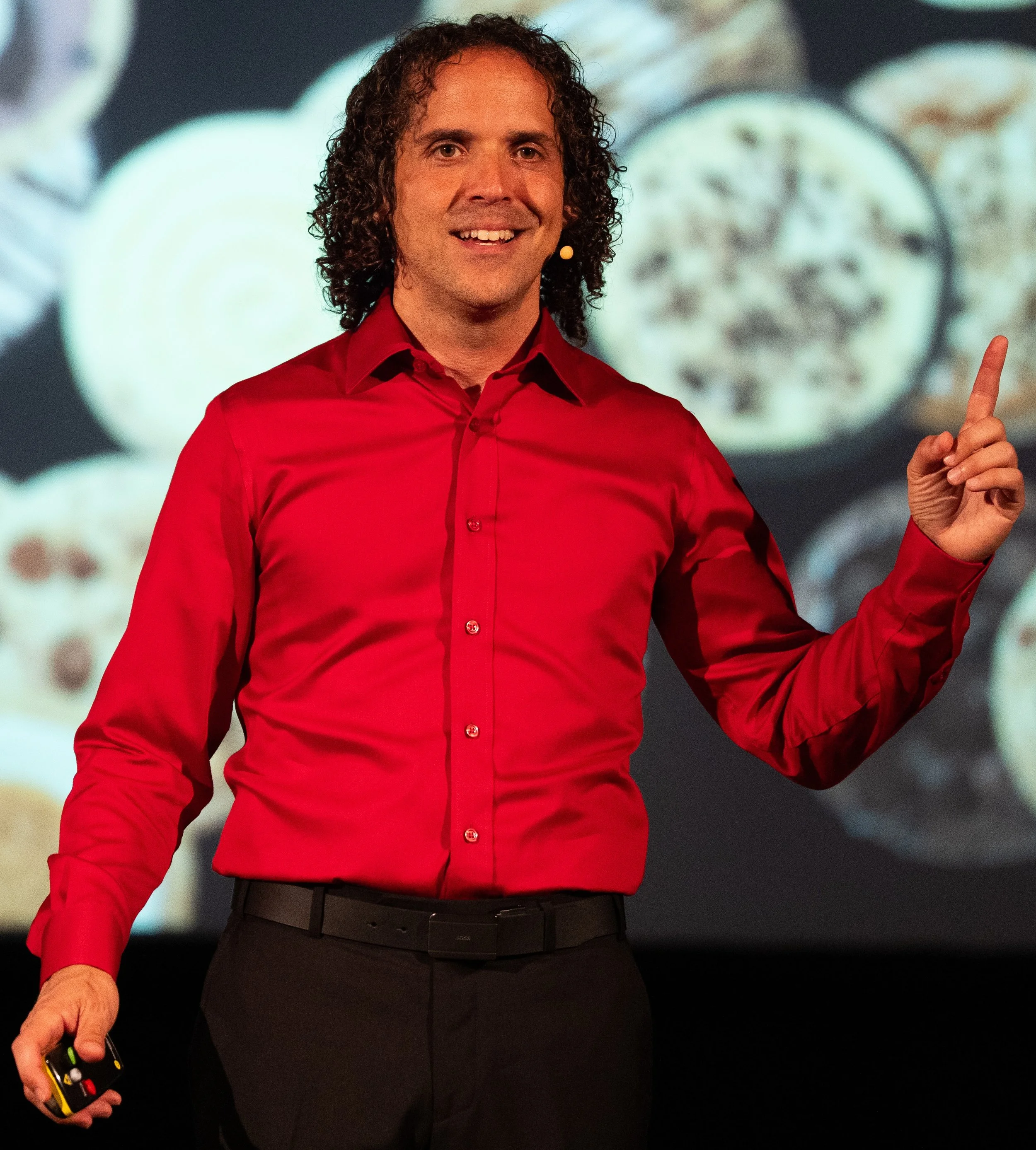
Davide Di Giorgio is a keynote speaker, operations & leadership advisor, and author of the Amazon #1 bestseller Being Unapologetic. He helps COOs, CEOs, and operations leaders get teams to perform when nobody's watching — by subtracting what's in the way, not adding more. It's a lens he built over 30 years on the front line — across hospitality, education, and multi-unit operations, from the floor, not from a textbook — and proved leading Crumbl's first international expansion, where the 24 Canada locations he opened generated over $100M in net sales. His signature keynote is From Correction to Commitment; his book Good Enough is out on 15 September 2026 at goodenough.davidedigiorgio.com.