
Your employee engagement score won't move because you're treating engagement like something you can add. It isn't. Engagement is an output. It's the readout of how committed people already are, and you can't raise a readout by pushing on it. For a quarter-century, US engagement has hovered around a third: 36% at its 2020 peak, back down to 31% now, with 8 million fewer engaged workers than five years ago. That's not for lack of trying. It's the most-measured, most-programmed number in your business, and it hasn't moved. When a number holds still through that much effort, the effort is aimed at the wrong place.
There's a ceiling on the score. And almost everything companies do to lift it is aimed above the ceiling, when the thing capping it sits below.
We've already tried adding, and we know it doesn't work
Walk into most organizations serious about engagement and you'll find a decade of additions. The programs. The fun days. The ping-pong table. The offsites. The bonuses. The catered lunches. The special sessions. The speakers flown in to fire everyone up for a Tuesday.
I'm not knocking any of it. People should enjoy where they work. But look honestly at the scoreboard: we have tried all of it, at scale, for years, and the national number sits exactly where it started. So we already have the answer to the question, does adding more raise engagement? We ran the experiment. It doesn't.
The score is stuck because everyone is measuring the ceiling instead of subtracting the thing holding it down.
Your engagement score is a thermometer, not a thermostat
A thermometer reads the temperature. A thermostat changes it. Your annual survey is a thermometer, and no one ever warmed a cold room by buying a more accurate one or by reading it more often.
That's the category error underneath the whole engagement industry. We keep upgrading the instrument. Better surveys, real-time pulses, sentiment dashboards, a live number on a screen in the leadership meeting. All thermometer. A dashboard reads the temperature. It still can't show you the cause, which is exactly what your dashboards can't show you. Meanwhile the temperature is set somewhere else entirely, by what it actually feels like to do the work under the conditions you've built. Engagement is the reading. Commitment is the temperature. And commitment doesn't respond to being measured. It responds to what you remove.
None of this is only my read from the floor. It's one of the most-replicated findings in work psychology: under self-determination theory, controlling conditions like surveillance and evaluation crowd out the intrinsic motivation that real performance runs on, while removing them lets it return. You don't add motivation. You stop suppressing it.
What actually caps the score: correction, not a missing program
If additions don't lift the number, what's holding it down?
Start with something that isn't a villain at all. As a company grows, it operationalizes. It builds process, structure, checks, sign-offs. That's how you scale, and most of it is a good thing. But operationalizing has a shadow. Every layer you add is a chance to add it carelessly, and a careless layer is almost always correction-based. It assumes the problem is the person, so it wraps them in one more approval, one more review, one more gate.
Think about what that does to the people you worked hardest to hire. You bring in skilled experts, and then you surround them with so many checks and processes that they can't actually be the experts you hired them to be. The message underneath all that machinery lands in two parts. First: I don't trust you to do this without being watched. And close behind it: I don't fully respect what you know, either. That is the real erosion. Not the workload. It's the signal, repeated daily, that the expertise you were hired for is neither trusted nor respected to operate on its own.
Correction produces compliance. Compliance is rented.
Compliance shows up when you're in the room and leaves the second you turn your back, and it is not the same thing as commitment, though most leaders pay for the first and write it up as the second. You can't survey your way across that gap, because the survey is measuring the very thing the oversight is suppressing.
This is the pattern I traced in why holding people accountable stops working at scale: pile controls on people and you get a leash; hand control to people, with real support and clear guardrails, and you get a launchpad. The leash caps the ceiling. No amount of pizza raises it.
There's a reason the sharpest decline is happening at the top of the org chart, not the bottom. In the last year, manager engagement fell from 27% to 22%, while individual contributors ticked slightly up. The people administering the correction are the ones burning out fastest, because holding a line you don't believe in is exhausting. When your managers are checked out, no engagement program reaches the floor. It has to pass through them first.
What moved the number when I stopped measuring and started subtracting
Before I ran an international expansion, I came into a team of more than fifty field trainers in the middle of hyper-growth. The standards existed. Someone brilliant had written them. But nobody was living them, so every opening looked different. And the trainers had heard a rumor about me before I arrived: that I'd been brought in to be the hammer. To clean house.
So they expected correction. The first thing I actually did was less dramatic than that. Before people can believe in a standard, there has to be a standard to believe in. So I spent that early stretch making the standard clear and black-and-white: naming what good looked like, showing everyone that it existed, and celebrating it out loud instead of policing it. I reminded people what the standard was and why it served them, that meeting it would earn them more respect from the owners they worked with and better results in their stores. I was watching too, learning how each person worked and where the field told me the standard itself needed adjusting.
Then I built the evaluation system around a single idea that had nothing to do with catching people: here's what I loved, and here's what I'd love to see more of. Same standard. A different lens. I wasn't hunting for what was wrong. I was naming what was working and asking for more of it.
I never surveyed that team's engagement. I watched the numbers that can't be faked. First, whether people stayed: before the system, the average field trainer lasted about six months, because the role read as a transient stepping-stone; after, they were staying two years and more. Second, whether the work itself got better: the owners started rating those openings higher, and the feedback they wrote about the trainers and their stores kept climbing. Those readings rose because the thing underneath them had changed, not because anyone measured harder.
And it moved fast. We saw the shift inside the first few months. By the time I moved on, about seven months into that role, the team was clearly and measurably different, in the best possible way. The retention gain to two years and more was the long-run proof, but the change in how people showed up was visible almost immediately.
I'm not alone in this, and the documented cases point the same way. Adobe's Donna Morris reported that after the company scrapped annual performance reviews for lightweight check-ins, voluntary attrition dropped 30%. Microsoft abandoned its stack-ranking system in 2013 for much the same reason: it was manufacturing internal rivalry instead of performance. In both cases the lever wasn't a new engagement initiative. It was the removal of a correction device that had been holding the ceiling down for years.
How to actually raise the ceiling
If you want the number to move, stop asking what to add and start asking what to take away. It's the discipline of the audio engineer, a world I was part of a lifetime ago and something I studied and practiced. You rarely fix a muddy mix by boosting more frequencies. You cut the ones fighting each other, and the clarity was there all along.
Most of the work is subtraction. Some of it is rebalancing. Now and then you'll need to strengthen something that's genuinely missing, a piece of real support, a bit of clarity, while you remove three things that are in the way. The honest version isn't "add nothing, ever." It's "stop adding on top of the problem, and remove the problem, or whatever's feeding it."
Three questions do more than any survey.
What are we correcting that we could coach instead? Every place you've installed oversight is a place you've told someone they can't be trusted. Some of it is load-bearing. Most of it isn't.
Where have we piled controls on people when we could hand control to them? Real authority, with support and guardrails, is the fastest way to turn compliance into ownership.
And what did the last survey actually change? If the honest answer is "we discussed the results and moved on," your people have already learned that the thermometer is theater, and that lesson costs you more engagement than the survey ever measured.
You don't lift the ceiling by measuring the room more precisely. You lift it by removing what's pressing down on it. Then the score moves on its own, because it was never the thing you needed to fix. It was only ever the reading.
Frequently Asked Questions
Why won't our employee engagement scores go up? Because engagement is an output, not an input. The score reflects how committed people already are. It doesn't respond to being pushed, measured, or programmed against. It moves when you remove what's suppressing commitment: the correction, oversight, and controls layered on capable people. Most engagement efforts add things on top of that layer instead of taking the layer away, so the number holds still.
Do employee engagement surveys actually work? A survey is a thermometer. It reads the temperature, it doesn't change it. Measuring engagement is only useful if it leads to changing something real, and more often than not that means taking something away rather than piling something on. Sometimes it's a rebalance: strengthen what's genuinely missing while you remove what's in the way. The most damaging thing a company can do is run a survey and then act on none of it, because that teaches people the exercise is theater and drives the real number down. The survey isn't the intervention. What you do afterward is.
Isn't low engagement just a manager problem? Managers matter enormously, and right now they're struggling most, with manager engagement falling faster than any other group. But blaming managers is itself a correction reflex. Two better questions come first. What is the system actually asking managers to do? If their job is mostly enforcement and oversight, they will burn out and their teams will disengage beneath them. And what have you done to genuinely develop them? Not pay them well, and not a self-paced module or a lunch-and-learn. I mean real coaching and real mentoring. You can't hand someone a hard job, invest nothing in growing them into it, then measure them and decide they're not good enough. Fix what managers are told to do, and how they're supported to do it, before deciding the managers are the problem.
How long does it take to improve employee engagement? Faster than most leaders expect, once you stop adding and start subtracting, because you're not building something new, you're removing what's already in the way. The change people feel first isn't a new program. It's the absence of something that used to weigh on them. On one team I rebuilt, we saw the shift within the first few months, and by the time I moved on, about seven months in, the team was already clearly different in the best way. The retention gains that followed, roughly quadrupling how long people stayed, were the long-run proof of a change that was visible almost immediately.
This is the argument at the center of my keynote, The Engagement Ceiling: why stuck scores, slipping retention, and checked-out managers are symptoms of the same cap, and what it takes to lift it. If your engagement number hasn't moved no matter what you add on top of it, that's the conversation I'd want to have with your leadership team. Start the conversation →
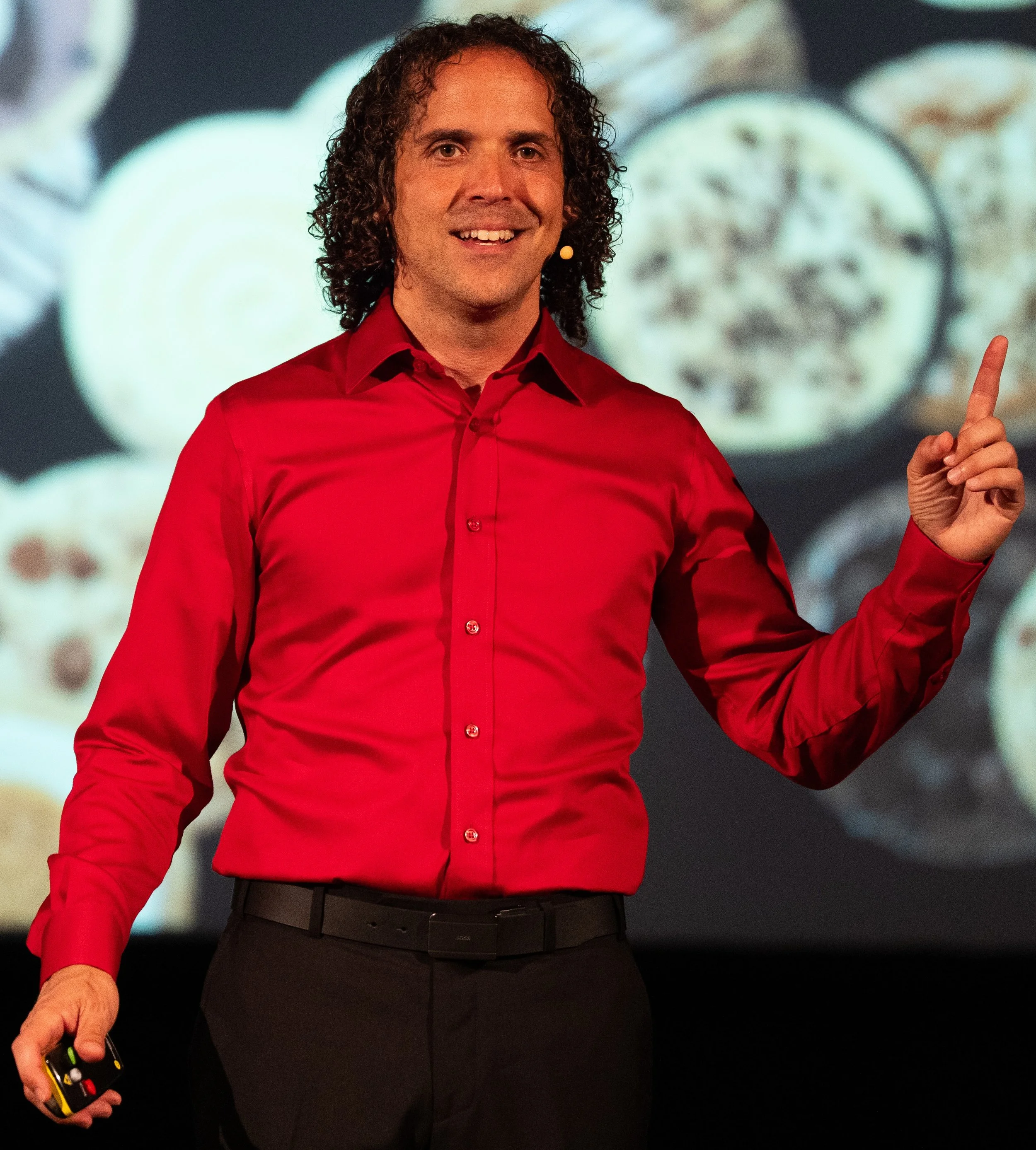
Davide Di Giorgio is a keynote speaker, operations & leadership advisor, and author of the Amazon #1 bestseller Being Unapologetic. He helps COOs, CEOs, and operations leaders get teams to perform when nobody's watching — by subtracting what's in the way, not adding more. It's a lens he built over 30 years on the front line — across hospitality, education, and multi-unit operations, from the floor, not from a textbook — and proved leading Crumbl's first international expansion, where the 24 Canada locations he opened generated over $100M in net sales. His keynote is From Correction to Commitment; his book Good Enough is out on 15 September 2026 at GoodEnough.DavideDiGiorgio.com.